Every spring and early summer, South Carolina homeowners find winged insects on windowsills and near exterior lights. The question of whether those insects are flying ants or termite swarmers determines whether the appropriate response is cleaning up the wings or scheduling a SCDPR-licensed termite inspection. They look similar at a glance, but the physical differences are clear under any magnification.
The four physical differences
Waist: Flying ants have a narrow, pinched waist (petiole) between the thorax and abdomen — the classic ant shape. Termite swarmers have a broad, uniform waist with no constriction between body segments.
Wings: Flying ants have two pairs of wings of unequal length — the front pair is longer than the rear pair. Termite swarmers have two pairs of wings of equal length that are much longer than the body and break off easily, leaving piles of wings near the swarm site.
Antennae: Flying ant antennae are elbowed — they bend at a sharp angle. Termite swarmer antennae are straight or slightly curved, like a string of beads.
Color: Formosan termite swarmers are caramel-colored or pale brown. Eastern subterranean swarmers are darker brown-black. Flying ants vary by species but are typically darker and more obviously ant-shaped.
When each appears in the Lowcountry
Eastern subterranean termite swarmers appear during the day in late February through April, often after rain, on warm mornings. Formosan termite swarmers appear at dusk from late April through June and are strongly attracted to outdoor lights. Flying ants typically swarm during warm days in late spring or summer, often after rain. Knowing the time of day and the season narrows the ID significantly before you even look at the insect.
What to do
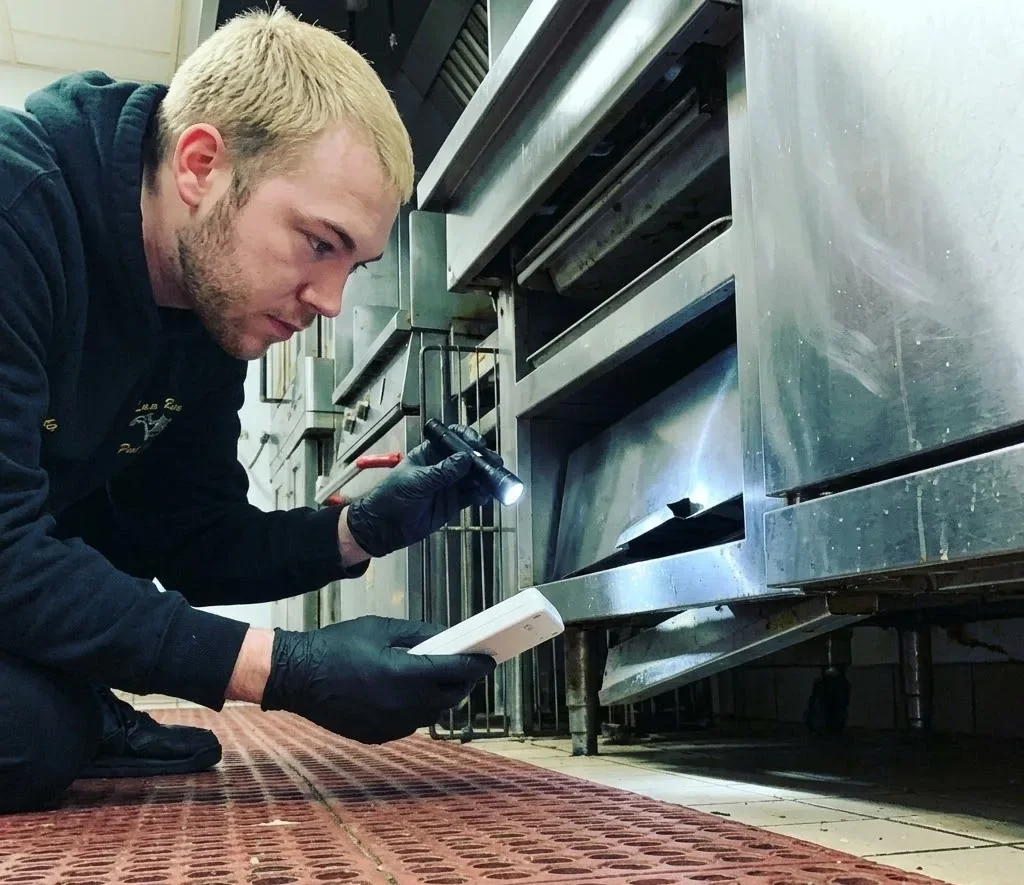
If you have any doubt, save a specimen — sealed in a small plastic bag — and photograph it before calling for an inspection. A SCDPR-licensed inspector can ID the species from a photograph in most cases and will confirm on inspection. Finding swarmers indoors (not just outside near a light) means the colony source is inside or immediately adjacent to the structure. That inspection should happen this week, not this month.
Dealing with this in your home?
Free inspections and straight answers across Mount Pleasant and the surrounding Lowcountry. Call (843) 868-3211 and we will connect you with a licensed local pro.