Spiky cream-colored egg sacs on outdoor furniture legs or under eaves
Brown widow egg sacs are unmistakable — the only common spider with spiky egg sacs. Finding them on outdoor furniture is a reliable identification.
Year-round; most active in warm months
The brown widow spider is now more common than the black widow throughout coastal South Carolina. It is tan to brown with orange-yellow hourglass markings on its underside and distinctive spiky egg sacs. Brown widows colonize outdoor furniture, play equipment, under eaves, and in dense landscaping. Their venom is potent but they are less aggressive than black widows and do not inject as much venom per bite.
This is what tends to get noticed first around here.
Brown widow egg sacs are unmistakable — the only common spider with spiky egg sacs. Finding them on outdoor furniture is a reliable identification.
Brown widows create messy cobwebs in protected areas: furniture joints, inside outdoor umbrellas, along fence rails.
Brown widow webs have characteristic trip lines near the ground level below the main web structure.
The brown widow has expanded its range northward throughout the Southeast and is now well-established in coastal South Carolina. It is displacing the black widow in many residential areas.
Mount Pleasant outdoor living — patios, play structures, and dense ornamental landscaping — provides ideal habitat.
Brown widow egg sacs — spiky, distinct from the smooth black widow version — turn up under patio furniture, in mailboxes, and along fence rails across Mount Pleasant, often unnoticed until someone reaches into a dark corner. The licensed pros we connect you with also field these calls in Charleston, from Harleston Village to Ansonborough, and out toward James Island along the Folly Road corridor, wherever ornamental shrubs and stacked outdoor clutter give this shy, non-aggressive spider the same undisturbed crevices it favors here.
The same job gets done in Folly Beach, Park West and Snee Farm, and everywhere else covered around Mount Pleasant.
Black widow spider. Black widows are glossy black with a red hourglass; brown widows are mottled tan-brown with an orange hourglass. Brown widows have spiky egg sacs; black widows have smooth, papery sacs. Both are venomous and should not be handled.
Direct removal of visible webs and egg sacs
Residual perimeter and vegetation treatment
Particular attention to outdoor furniture, play equipment, and landscaping beds
The honest split is simple: contained and caught early is a single visit; recurring outdoor pressure is a plan.
| Your situation | What normally fits |
|---|---|
| One nest, one room, caught quickly | A one-off |
| The same problem returning every season | Seasonal plan |
| Something living in the building | Treatment plus sealing work |
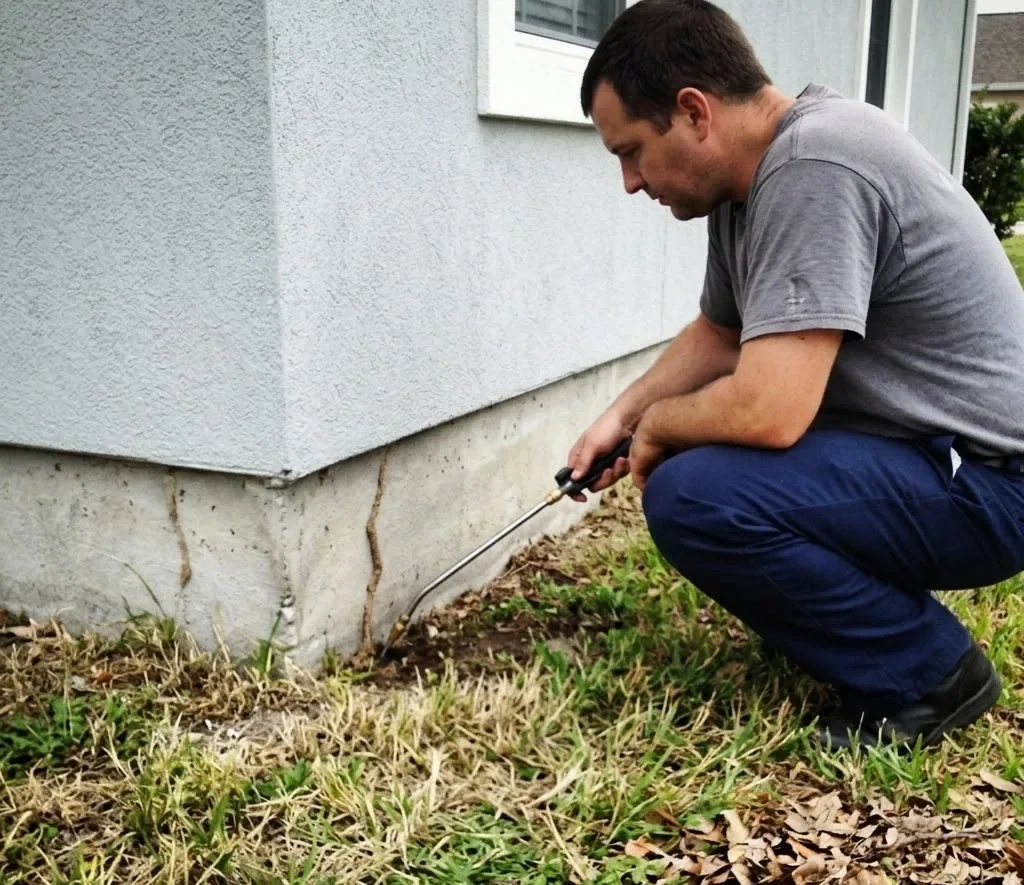
Wearing protective gloves and carefully knocking down webs and egg sacs with a stick before discarding is a partial control measure. A professional perimeter treatment reduces the ongoing population.
Brown widow bites are painful and can cause localized neurological symptoms. Medical attention is recommended for bites on children, the elderly, or anyone with compromised health. Full systemic symptoms are less common than with black widow bites.
A guide figure for brown widow spider locally is an estimated $99 to $239, which is a band rather than a quote. The inspection costs nothing and the real number goes in writing before anyone starts. Estimated bands, and what pushes a job up or down them, are set out on the pricing guide, and the service that handles this is General Pest Control.
Moisture-Loving Insects in Crawl Spaces and Bathrooms. Silverfish are fast-moving, silver-gray insects that thrive in humid environments — crawl spaces, bathrooms, and storage areas with poor ventilation.
The Lowcountry Name for American Cockroach. Palmetto bug is the local Lowcountry term for the American cockroach — a large, reddish-brown roach that lives outdoors in mulch, palmettos, and storm drain systems and moves inside through gaps under doors, around plumbing, and from crawl spaces.
Primary Biting Tick in the Lowcountry. The lone star tick is the primary biting tick in South Carolina and the most common tick encountered in the Lowcountry.
Brown widow venom is actually more potent per unit, but brown widows are less aggressive and inject less venom per bite. In practice, black widow bites are associated with more severe systemic symptoms. Both should be treated as medical concerns.
Yes. Regularly inspect play equipment, especially joints and hollow areas, for webs and spiky egg sacs. Remove them with a stick and gloves, not by hand.
Minimize clutter in outdoor areas, keep dense vegetation trimmed away from the house perimeter, and shake out outdoor furniture and equipment before use. Consistent perimeter treatment reduces the population.
A free inspection settles what it is and how far it has gone. Call and we will connect you with a licensed local pro.
Call (843) 868-3211