Attic Decontamination in Mount Pleasant | Odor and Contamination Removal
What decontamination actually covers, what enzyme treatment does, and when it needs to become a full removal.
Attic decontamination is the clean-up that follows a successful exclusion. It removes droppings, nesting material and the compounds in urine that soak into wood and insulation and keep releasing odor. Without it, the sealed entry point stops new animals getting in but the scent record left behind keeps drawing scouts back to the same roofline — and in a Lowcountry summer, that odor moves down into the living space rather than staying above the ceiling.
What decontamination actually involves
Decontamination is not a spray and a wipe-down. It starts with physical removal of nesting material, food caches and concentrated droppings, done by hand in protective equipment before any product is applied. Material left under insulation, behind stored boxes or packed into a corner keeps releasing odor regardless of what gets sprayed over the top of it.
After the physical removal, framing surfaces and any insulation that is staying are treated with an enzyme-based product. The distinction between that and a deodoriser is the whole point: an enzyme breaks the organic compounds in urine and droppings apart, so the source stops existing. A deodoriser adds a competing smell and wears off. If the quote you are given says deodorise rather than treat, ask which one they mean.
Surfaces are then left to dry properly before anything is closed up or re-insulated. Treating damp framing and immediately burying it under fresh material is how a job that looked finished starts smelling again in August.
Attic contamination in Mount Pleasant often traces back to how close a roofline sits to standing wildlife pressure. Out toward Dunes West, lots backing onto the Wando River marsh frontage and tidal salt marsh along the Highway 41 corridor draw more raccoons and rodents into soffits than a dry inland attic ever sees. Even homes further from Wagner Creek get the same nesting odors once animals push inward chasing shade, which is why the licensed pros we connect you with test airflow before sealing anything back up.
Why a Lowcountry attic makes this worse than it sounds
An attic in Mount Pleasant regularly runs past 130°F between June and September. Heat drives volatilisation — the odor compounds move from the material into the air far faster at that temperature than they would in a cool attic — so contamination that would be a background smell in a northern house becomes noticeable through the ceiling here.
The route down is usually the same set of gaps every time: recessed light housings, the attic hatch, plumbing and wiring penetrations above interior walls, and the return-air side of an HVAC system where the air handler sits in the attic. That last one matters most. A leaking return plenum in a contaminated attic actively pulls attic air into the ductwork and distributes it through the house.
Which is why a decontamination in this area should include a look at the duct seals and the plenum, not only the deck. It is not upselling; it is the difference between removing a smell and removing the smell's delivery system.
Marsh humidity settles into attic decks across Mount Pleasant in a way drier inland air never does, and that dampness is exactly why the licensed pros we connect you with treat duct sealing as standard rather than extra. The same moisture load shows up in condos near The Battery and shotgun houses off King Street in Charleston, and further out along the I-26 corridor near Summerville, where new builds around Nexton trap humidity behind tighter insulation. Wherever the climate is this heavy, skipping the ducts just means the smell comes back.
When decontamination has to become a full removal
Where contamination is widespread — a long occupation, a large colony, several separate nesting areas — treating insulation in place does not clear the odor load. Blown insulation behaves like a sponge, and there is a limit to how far a surface-applied enzyme penetrates a fourteen-inch depth of fiber.
For light, localised contamination the opposite is true: a single nest area with a short occupation cleans up well in place and there is no sense in stripping an attic that does not need it.
The deciding test is simple and worth insisting on. Once the physical debris is out and surfaces are treated, let the attic heat up through an afternoon and go back to it. If the smell has gone, the job is done. If it comes back with the heat, the material is holding it and it needs to come out.
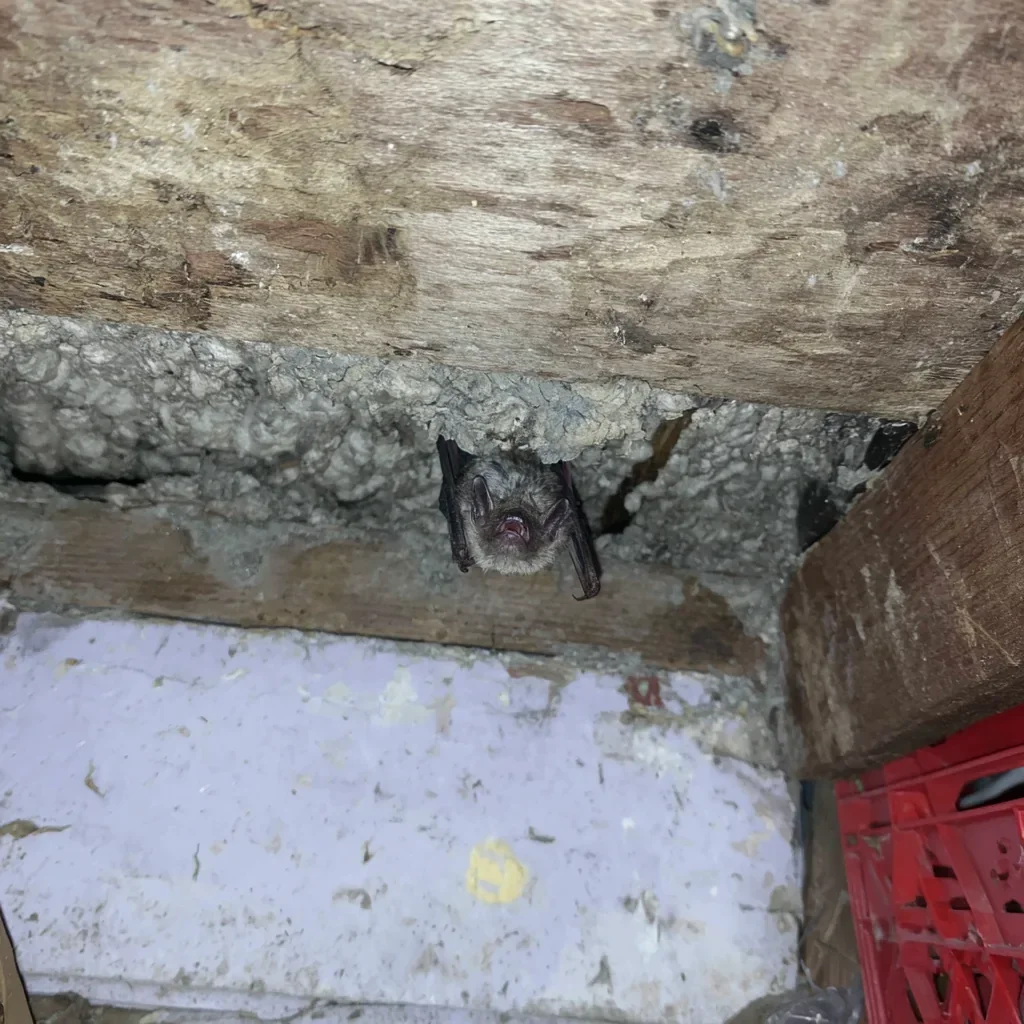
Bat guano is the exception where removal is almost always the answer regardless of depth, because guano accumulates far more heavily than rodent droppings and breaks down into fine airborne dust as soon as it is disturbed.
Attic access shapes how far this goes in Mount Pleasant, and it is rarely a quick crawl-in. Near Daniel Island, where growth around Credit One Stadium and the offices at Blackbaud has pushed hospitality, retail, and construction crews through fast-built attics along the Wando River waterfront, insulation gets torn out and reset more often than checked first. The licensed pros we connect you with can walk that difference on-site rather than pricing it blind over the phone.
What protection the work needs, and why
Rodent droppings and urine in an enclosed unventilated space are the reason this is done in P100 respiratory protection, disposable coveralls and eye protection rather than a dust mask. Hantavirus risk in the Southeast is genuinely low — the species that carry it are not the ones typically in a Mount Pleasant attic — but leptospirosis, salmonella and simple allergic response to aerosolised droppings are all realistic, and the precautionary standard is not onerous.
The other reason for full protection is that attic work means kneeling and crawling in the material rather than standing over it. Whatever is on the deck ends up on clothing and in the air at breathing height.
For a homeowner who wants to do the physical part themselves, that is feasible with proper equipment. Wet the material lightly before disturbing it, bag at source rather than carrying loose debris across the attic, and do not use a domestic vacuum — a standard household filter passes the particles straight back into the room.
Documentation, and why to keep it
Ask for the scope in writing, with photographs before and after. Two situations make that worth having: an insurance claim, where the assessor will want evidence of the condition before remediation, and a future sale, where a buyer's home inspector who finds evidence of past animal activity will ask what was done about it.
South Carolina residential property disclosure asks sellers about known material defects. A properly documented remediation answers that question cleanly. An undocumented one leaves you explaining from memory.
A re-inspection at around thirty days is a reasonable thing to expect as part of the job rather than as an extra. It is the point at which any missed area will have declared itself.
What attic decontamination typically covers
- Physical removal of nesting material, droppings and food caches in P100 respiratory protection
- Inspection of framing for gnaw damage, wiring damage and urine staining
- Enzyme treatment of contaminated framing and of any insulation that is staying in place
- A check of duct seals and the air handler plenum where the HVAC sits in the attic
- A second application where the first does not fully clear the odor
- Photographic documentation of the scope for insurance or later disclosure
- A re-inspection at around thirty days to confirm the odor has not returned
Frequently Asked Questions
Will the smell go away on its own if I just seal the entry points?
No. Urine soaks into wood fiber and breaks down very slowly, and in a Lowcountry attic that passes 130°F in summer the heat drives the odor compounds into the air rather than letting them fade quietly. Sealing stops new animals getting in. It does nothing about what the previous ones left, and the scent is exactly what draws the next one to the same roofline.
Can I do the decontamination myself?
The physical removal is within reach of a capable homeowner with P100 respiratory protection, disposable coveralls and eye protection. The limit is the treatment stage — consumer enzyme products are not formulated at professional concentration and often will not clear a significant contamination load. For bat guano specifically, the volume and the dust make it a job worth handing over.
What is the difference between an enzyme treatment and a deodoriser?
An enzyme breaks the organic compounds in urine and droppings apart so there is nothing left to smell. A deodoriser adds a stronger competing scent and masks the problem until it wears off, usually within weeks. They are sold in similar-looking containers and the words get used loosely, so it is worth asking directly which one is being applied.
Does homeowner insurance cover this?
Sometimes, and usually only in part. South Carolina policies generally treat gradual animal damage as a maintenance issue rather than a covered peril, so clean-up on its own often falls below the deductible or outside cover altogether. Sudden consequential damage — a ceiling failing, wiring damage causing a further loss — has a better chance. Photograph everything before work starts; without that, the question does not even get assessed.
How soon can new insulation go in after treatment?
Once the treated surfaces are properly dry, which in a warm Lowcountry attic is usually the same day or the next. The mistake to avoid is closing damp framing under fresh material — it traps the moisture and the odor returns through the new layer within a season.
Get a decontamination assessment after the animals are out
Call and we will connect you with a licensed local pro who can assess the scope, tell you plainly whether treatment in place or full removal is warranted, and do the work with proper protection and written documentation.
Call (843) 868-3211