Yellowjackets vs Wasps in SC: What Is the Difference?
They are all called wasps, but their behavior, nesting habits, and sting risk are very different. Knowing which species you have determines how (and whether) to treat it.
Read article
Paper wasps, yellowjackets and hornets removed safely by a local licensed pro. Stinging season runs March through October.
Wasp nest removal Mount Pleasant, SC homeowners can count on starts with a licensed pro who identifies the species and treats the nest safely. Stinging insects are active here from early March through October.
Paper wasps, yellowjackets and bald-faced hornets all sting repeatedly, and stings can be a serious risk for anyone who is allergic. Don't wait for a nest to grow: call now and we'll connect you with a local licensed pro.
Across Charleston County, whether you're in James Island, Johns Island, West Ashley, or elsewhere around Mount Pleasant, homeowners call us for wasp nest removal because we treat the conditions specific to this area rather than applying a generic plan. It's the same reason our paper wasps results hold up.
Whether it is a house or a business, the work is similar — residential is scheduled around you, and commercial is scheduled around trading and documented for inspections.
Paper wasp nests are open-celled and easy to spot under eaves or deck rails. A spring nest starts golf-ball size and can reach 200 workers by midsummer.
Guard wasps hovering near a ground opening and flying in and out point to a yellowjacket nest. These are often in abandoned rodent burrows near lawns or mulch beds.
Bald-faced hornet nests are gray and football-shaped, visible in trees or on structures by late summer. Colonies can reach 700 workers and defend hard.
The pro confirms whether it is a paper wasp, yellowjacket or hornet nest, since each needs a different approach.
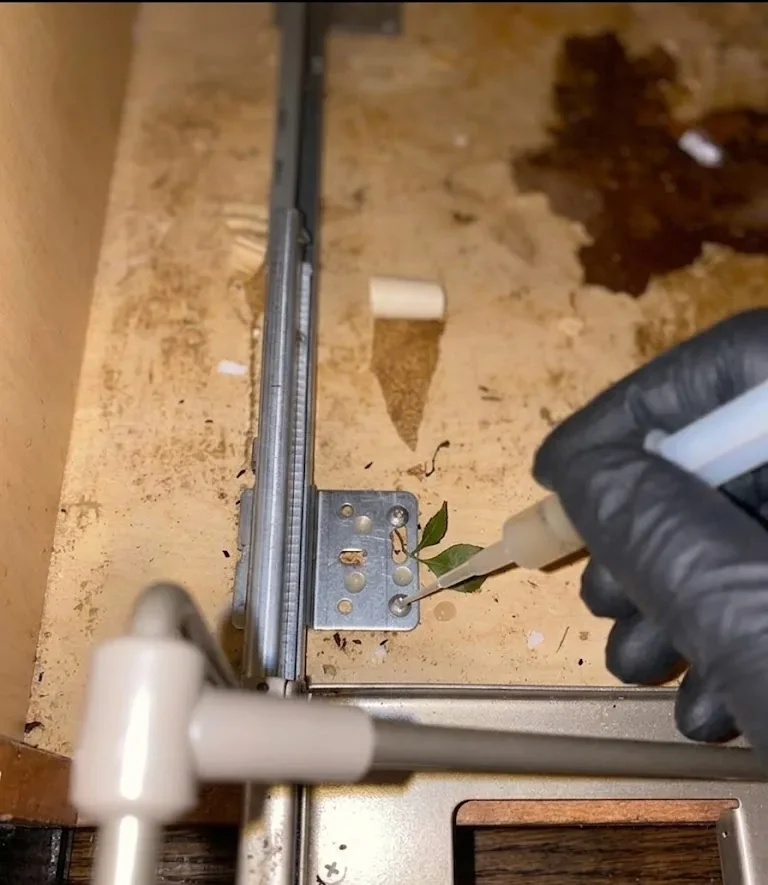
The right product goes directly on the nest opening, ideally at night when the workers are inside.
Once treatment is confirmed, the nest is taken down. A paper wasp nest left in place and marked can deter other colonies.
Paper wasps return to the same eave sites each spring, and removing a nest does not stop new nesting there. Fake nests or physical exclusion are the follow-up step for recurring sites.
These are the working bands for wasp nest removal locally. A Lowcountry crawl space or a summer attic pushes toward the top of them, because both slow the work down.
| Job size | What it covers | Estimated cost |
|---|---|---|
| One area | A single room or one active problem area | an estimated $85–$250 |
| Whole property | Standard interior treatment with the exterior barrier renewed | an estimated $100–$360 |
| Bigger property | Larger home, or a problem found in the crawl space as well as inside | an estimated $150–$575 |
| Established | Widespread activity needing staged visits and sealing work | an estimated $240–$955 |
Exclusion work is priced separately, because it is construction rather than treatment. See the Mount Pleasant pricing guide for the whole picture, including where insurance does and does not apply.
Wasp removal means a licensed pro identifies the species, treats the nest and takes it down once the treatment is confirmed. Paper wasps, yellowjackets and bald-faced hornets each need a different approach.
Paper wasps build open, umbrella-shaped nests on eaves, window frames, door frames and in shrubs. Yellowjackets nest in the ground or in wall voids and are far more aggressive, especially in late summer.
Bald-faced hornets build large gray enclosed nests in trees and shrubs from mid-summer on. Nests near a doorway or HVAC unit, and any ground nest, are best left to a pro.
You can treat a small, easy-to-reach paper wasp nest at night with an aerosol wasp product, but only if you won't be trapped near it. Yellowjacket ground nests and any nest near a doorway or HVAC unit should be handled by a pro because of the risk of a defensive swarm.
Yellowjacket colonies reach their largest and most defensive size in August and September, when they start producing new queens. Food also gets scarcer, so they forage more aggressively around outdoor dining.
No, mud daubers are solitary wasps that are not aggressive and very rarely sting. Removing their mud nests is cosmetic, not a safety need.
wasp nest removal around Mount Pleasant typically falls inside $99–$239. Older housing on crawl spaces sits toward the upper half of that, because there is more to inspect and more to seal.
More on this, written for coastal South Carolina rather than for somewhere with winters.

They are all called wasps, but their behavior, nesting habits, and sting risk are very different. Knowing which species you have determines how (and whether) to treat it.
Read article
A small exposed paper wasp nest in early spring is a manageable DIY job. A yellowjacket colony in a wall void in August is not. The species and location determine everything.
Read articleCall for a free inspection and an honest answer on wasp nest removal in Mount Pleasant and the towns around it — including whether you actually need it.
Call (843) 868-3211