The Wood Destroying Insect Report (CL-100) in Mount Pleasant
What each part of the South Carolina termite letter records, what the moisture numbers mean, and what a finding actually obliges anyone to do.
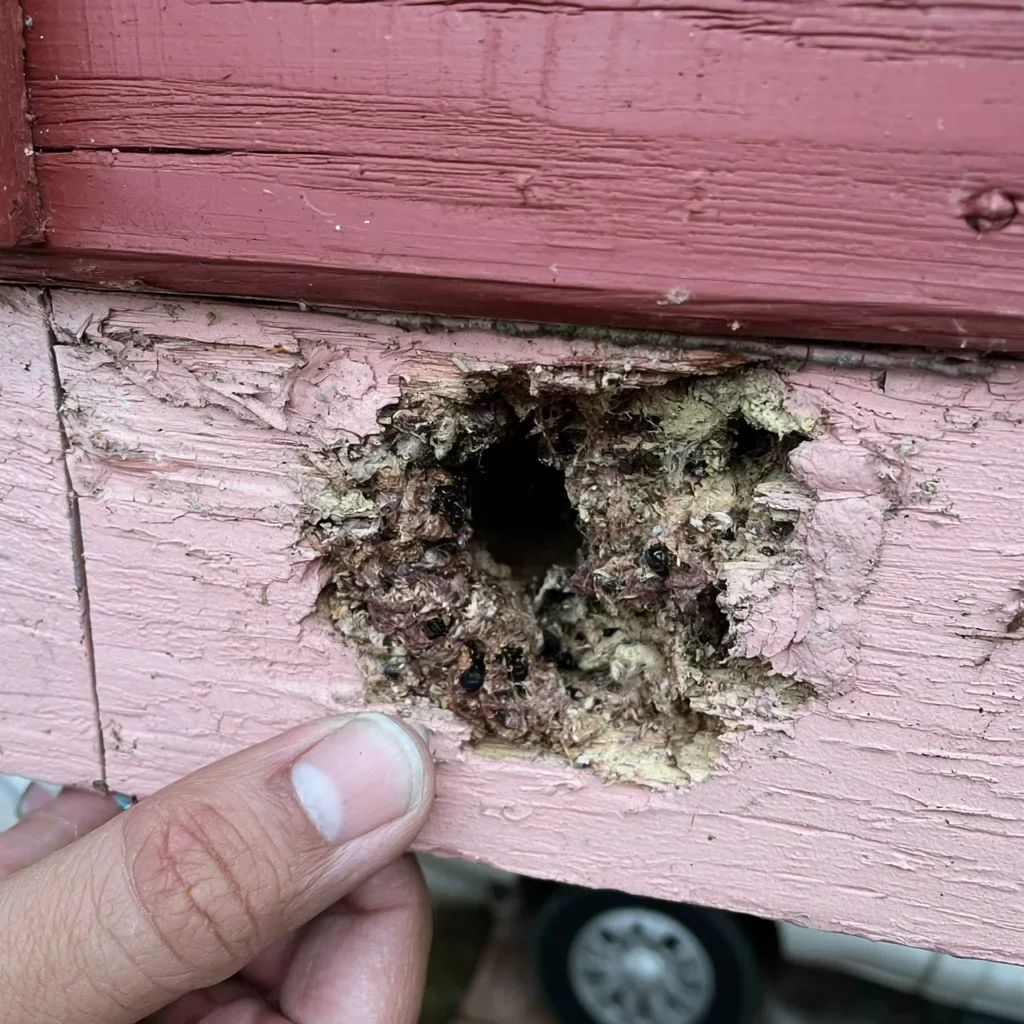
The CL-100 Wood Infestation Report is South Carolina's standard form for recording wood-destroying organisms found at a property. It documents visible active infestation, visible damage from past or present activity, and substructure moisture conditions — using defined thresholds of 20% for an excessive moisture condition and 28% for active wood-decay fungi. It is issued by an SCDPR-licensed operator and it reports what was visible in accessible areas on the day, nothing more.
What the report covers
The organisms in scope are the ones that eat or degrade structural wood: subterranean termites, which in this region means both Eastern subterranean and Formosan; drywood termites where present; powderpost beetles and old house borers; carpenter ants and carpenter bees; and wood-decay fungi, which most people call rot.
For each of those the report distinguishes between active infestation seen at the time of inspection and evidence of previous activity. The distinction matters enormously in a transaction and is routinely blurred in conversation about it.
Substructure moisture is recorded because it is the condition that drives most of the rest. The form uses specific numbers rather than adjectives, which makes it one of the few property documents where you can compare one house directly against another.
What it does not cover is anything outside those categories. Roof condition, plumbing, wiring, structural adequacy, mold as an air quality issue — none of it. That is a home inspector's job and, for structural questions, an engineer's.
The report itself travels the same across the Lowcountry, but what inspectors find underneath varies by how close a lot sits to open water. Closer to Charleston, near the tidal marsh creeks and the Ashley River, moisture pressure on sills and joists runs higher than it does farther inland. The licensed pros we connect you with note that on a CL-100 for a Mount Pleasant property, since a clean report near the coast still means checking softer wood more carefully than one out past James Island or the Folly Road corridor.
The moisture thresholds, and what each one triggers
Two numbers do most of the work. At 20% wood moisture content and above, the report records an excessive moisture condition in the substructure. At 28% and above, wood-decay fungi are active, meaning decay is happening rather than merely possible.
A reading in the twenties is not a disaster and it is extremely common in Lowcountry crawl spaces, particularly in late summer. What it is, is a documented condition — and once documented, a lender or a buyer can reasonably ask what is being done about it.
The remedies are the ordinary ones: correct the drainage and the gutter discharge, lay or repair a ground vapor barrier, add dehumidification, remove the debris and the wood-to-soil contact. In most cases the fix is measured in hundreds rather than thousands.
Readings at 28% and above are a different conversation, because at that level something is already decaying and the affected members need assessing rather than just drying out.
That threshold matters just as much on inspections the licensed pros we connect you with run outside Mount Pleasant, in Moncks Corner homes near Santee Cooper land or closer to Biggin Creek, where crawl spaces sit low against the same coastal water table. A 28% reading there gets the same treatment as one found here: the board gets flagged for a contractor's assessment, not a dehumidifier, because the report has to describe what's actually happening to the wood, not just what caused it.
| Substructure reading | What the report records | Usual response |
|---|---|---|
| Below 20% | No excessive moisture condition | Nothing beyond routine maintenance |
| 20% or above | Excessive moisture condition present | Drainage, vapor barrier, dehumidification; re-read after |
| 28% or above | Conditions for active wood-decay fungi | Moisture control plus assessment of the affected members |
| Visible fungal growth | Recorded with location | Treatment of the growth and correction of the cause |
| Standing water | Recorded as a conducive condition | Grading, gutters and a drainage path before any liner |
Conducive conditions, and why they appear on so many reports
A conducive condition is something that makes infestation more likely without being infestation itself. The list is predictable and it is where most Mount Pleasant reports pick up their findings: wood-to-soil contact, debris under the house, form boards left in place from construction, firewood stacked against a wall, mulch piled above the slab line, shrubs planted hard against the foundation, and poor drainage.
They appear on so many reports because they are genuinely everywhere, and because most of them were created by ordinary landscaping and storage decisions rather than by neglect.
They are also the cheapest findings on any report to clear. Moving a woodpile, pulling old form boards, cutting a shrub back and extending a downspout are an afternoon's work and they remove real risk rather than cosmetic risk.
A report with several conducive conditions and no active infestation is a normal report for this housing stock. It is worth acting on, not worth panicking about.
Conducive conditions cluster differently depending on proximity to water and tree cover. Near Daniel Island, retention ponds and tidal creeks off the Wando River keep grade moisture high enough that mulch-to-siding contact and low porch clearance show up on report after report, while lots further inland in Mount Pleasant tend toward earth-to-wood contact from aging landscaping instead. Neither pattern means infestation. It means the ground stays wet longer than the framing was built to tolerate, which is exactly what the report is there to catch.
Accessible, inaccessible, and what that word is hiding
Every CL-100 is limited to accessible areas, and the form records what was not accessible. Common entries: crawl space blocked by stored contents, insufficient clearance under part of the structure, finished basement or garage walls, areas obstructed by ductwork or insulation.
That section deserves reading carefully, because a report can be technically clear while the inspector was unable to see a third of the substructure. A clear report on a fully accessible crawl space and a clear report on one where half was blocked are not the same document.
If access was limited, the practical response is to clear it and have the inspector return. On a purchase, that is a reasonable thing for a buyer to ask for and an unreasonable thing for a seller to refuse.
Lenders sometimes reject reports with significant inaccessible areas, so this is not only a diligence point — it can hold up a closing.
Who can issue one, and how to check them
The report must be issued by a pest control company licensed by the South Carolina Department of Pesticide Regulation, which sits within Clemson University's regulatory services. The license number belongs on the report.
Checking that number takes a couple of minutes and it is the most basic verification available. It confirms the company is licensed to do the work and that the license is current.
The inspector should be willing to walk you through the findings and show you photographs. An operator who will not explain what they wrote is one to be wary of, and on a document this consequential you are entitled to ask.
Where a finding is significant and the same company is offering to fix it, a second opinion from an independent operator is cheap and sensible. That is not an accusation of bad faith; it is normal practice on any report that carries a large remedy attached.
What the report obliges anyone to do
On its own, nothing. The CL-100 is a report, not an order. What creates obligation is the purchase contract and the lender's conditions, and those vary.
Typically a lender will require active infestation to be treated before closing, and will want that documented. Previous damage is usually a negotiation item rather than a lender requirement, unless it is severe enough to raise a structural question.
Moisture and conducive conditions are most often handled as a negotiation between buyer and seller — a credit, a price adjustment, or the seller having the work done before closing.
For an owner not in a transaction, a CL-100 carries no obligation at all. It is simply a good snapshot of the condition of the substructure, and having one done outside of a sale is a reasonable thing to do every few years on an older house.
What the CL-100 records
- Active infestation by wood-destroying organisms, with location
- Visible damage from past or present activity, with location
- Substructure wood moisture readings against the 20% and 28% thresholds
- Visible wood-decay fungal growth
- Conducive conditions such as wood-to-soil contact, debris and poor drainage
- Areas that were inaccessible at the time of inspection, and why
- The issuing company, its SCDPR license number, and the inspection date
Frequently Asked Questions
What does the 28% moisture reading actually mean?
It means wood-decay fungi are active at that location — decay is occurring, not merely possible. Twenty percent and above records an excessive moisture condition, which is the warning level; 28% and above is where the wood is being degraded. A reading in that range means the affected members need assessing as well as the moisture being corrected.
My report says previous evidence but no active infestation. What does that mean?
That the inspector found signs of past activity — old mud tubes, damaged wood, exit holes — with nothing live at the time of inspection. It usually means a previous treatment worked. It does not tell you whether the old damage matters structurally, which is a separate question for an engineer or a qualified contractor where the damage looks significant.
Does a CL-100 cover mold?
Not as an air quality question. It records visible wood-decay fungi, which is rot affecting structural wood, and it records the moisture conditions behind it. If you want an assessment of mold as an indoor air issue, that is a different inspection by a different specialist.
How much does a CL-100 cost in the Charleston area?
Typically a modest few hundred dollars for a standard residential property, varying with size and access. Where the inspection is being done as part of a bond or an existing service relationship it is sometimes included. What moves the figure most is the substructure — a tight or partly blocked crawl space takes longer.
Can I get a CL-100 if I am not selling?
Yes, and on an older Mount Pleasant house it is a sensible thing to do every few years. Outside a transaction it carries no obligation, and it gives you a documented baseline of substructure moisture and any activity — which makes the next report far more useful, because you can see what has changed.
Get the report read to you properly
Call and we will connect you with an SCDPR-licensed local inspector who will carry out the CL-100, show you photographs of every finding, and explain in plain language what each line on the form actually means for your house.
Call (843) 868-3211