Wasps flying in and out of a hole in the ground
Active yellowjacket ground nest. Do not block the entrance — the colony will find another way out, potentially through interior walls.
Active spring through early winter; peak size and aggression August-October
Yellowjackets are the most aggressive common wasp in South Carolina. They nest in the ground, in wall voids, and under decks and porches. Unlike honeybees, they can sting repeatedly and will aggressively defend the nest when disturbed. In the Lowcountry warm climate, colonies grow large through the summer and can have thousands of workers by late August.
Any one of these is worth a look; two together usually means it is established.
Active yellowjacket ground nest. Do not block the entrance — the colony will find another way out, potentially through interior walls.
Wall void nest. Can be large and difficult to treat without locating the internal nest cavity.
Yellowjacket colonies scavenge protein and sugar in late summer as colony population peaks.
The Lowcountry warm season is long enough for yellowjacket colonies to reach maximum size. In colder climates, frost kills colonies before they reach peak size. In coastal SC, colonies persist through most of the fall.
The mix of open ground, landscaping, and older structures with wall voids provides abundant nesting habitat.
The same job gets done in Summerville, Charleston and James Island, and everywhere else covered around Mount Pleasant.
Paper wasp. Paper wasps build open, umbrella-shaped nests under eaves and in shrubs. Yellowjackets build enclosed nests, often underground. Paper wasps are less aggressive and only sting when the nest is directly threatened.
Nest treatment at night when all workers are inside
Residual application at the entry points
Wall void nests require locating the internal cavity for effective treatment
Never block a ground nest entry without treating first
In the Lowcountry the balance tips toward plans more often than it would further north, because nothing here gets a winter reset.
| The case | Usually the right call |
|---|---|
| A single active problem, found early | Single visit |
| Something that keeps reappearing | Recurring plan |
| A problem in wall voids, an attic or a crawl space | Treatment, then closing the way in |
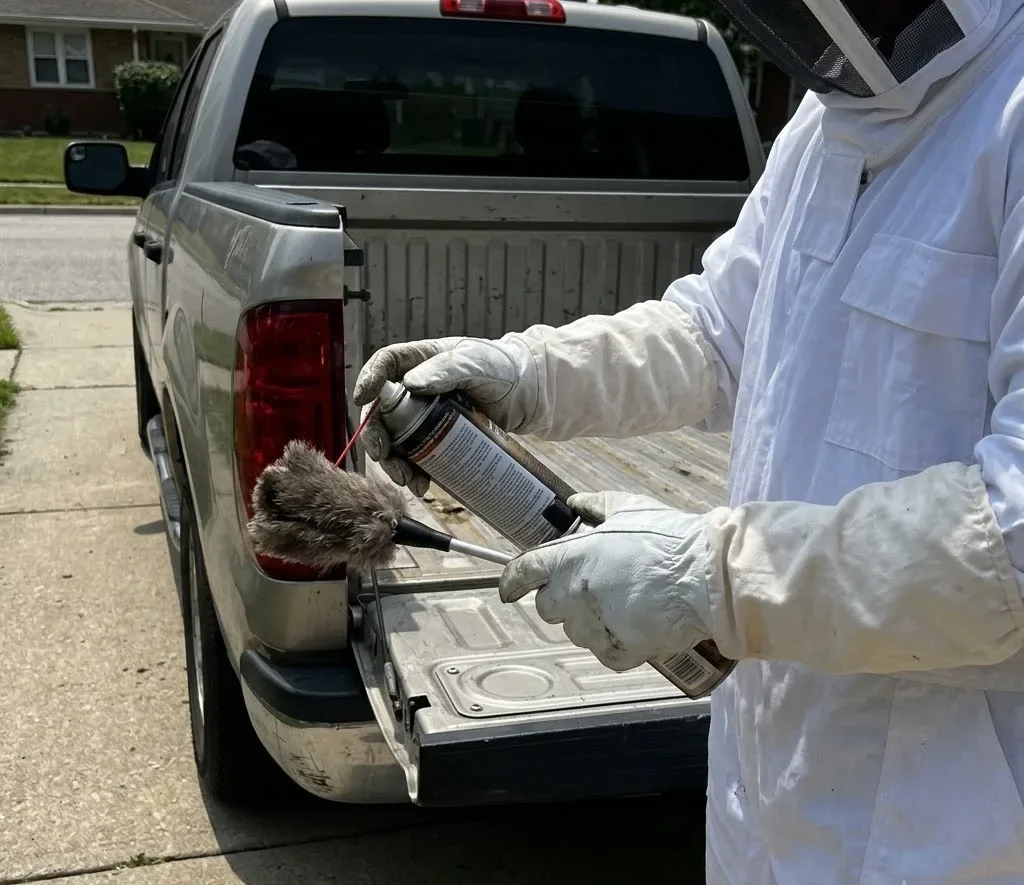
Yellowjacket ground and wall void nests are hazardous to treat without protective equipment. A disturbed nest will send the entire colony into a defensive attack. Professional treatment is strongly recommended.
Yellowjacket stings are painful. Multiple stings or stings in individuals with venom allergy can be life-threatening. Anyone with a known yellowjacket allergy should carry an epinephrine auto-injector and seek emergency care immediately if stung.
Expect roughly $99 to $239 for yellowjackets in this area, with access and spread doing most of the moving. The inspection costs nothing and the real number goes in writing before anyone starts. Estimated bands, and what pushes a job up or down them, are set out on the pricing guide, and the service that handles this is Wasp Nest Removal.
Most Widespread Termite in South Carolina. Eastern subterranean termites are the most widespread termite species in South Carolina and are present throughout Charleston County.
The Lowcountry Yard Pest That Stings Repeatedly. Red imported fire ants are present in virtually every yard in Mount Pleasant and throughout Charleston County.
Coastal Mosquitoes That Travel from Lowcountry Wetlands. Salt marsh mosquitoes breed in the vast coastal wetlands — tidal flats, pluff mud, and salt marsh grass — surrounding Mount Pleasant, Isle of Palms, and Sullivan Island.
It is possible with the right protective equipment and a labeled dust applied at night, but the risk of defensive stinging is real. Wall void nests are significantly more hazardous because the nest location inside the wall is often unknown. Professional treatment is the safer choice.
Do not seal the entry. Do not disturb the area. The colony will defend aggressively if disturbed. Call a licensed professional who can locate the nest cavity and treat it directly.
In very cold climates, frost kills the colony in late fall and the nest does not reactivate the following year. In coastal South Carolina, colonies can persist well into November and December. A wall void nest that is not treated may overwinter.
One phone call and a licensed pro will tell you what you are actually dealing with, at no cost and with nothing attached.
Call (843) 868-3211