Termite Bonds and Pest Guarantees in Mount Pleasant
The difference between a retreatment bond and a repair bond, what voids one, and what a general pest guarantee is worth.
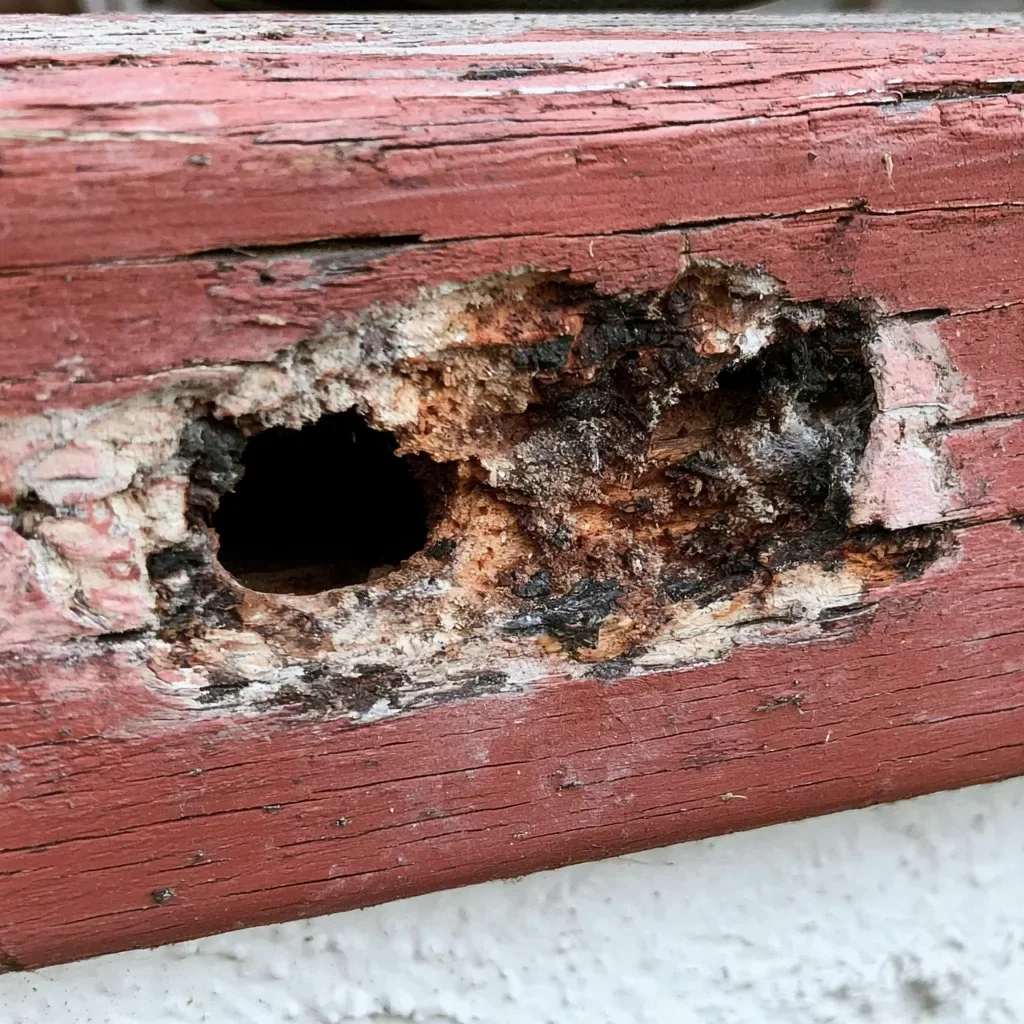
A termite bond is a service agreement between you and a licensed operator: they treat the property, inspect it annually, and commit to something if termites return. What that something is varies enormously. A retreatment-only bond pays for further treatment. A repair bond pays for treatment and for repairing new damage, usually up to a stated limit. In a region with both Formosan and Eastern subterranean termites, the difference between those two documents is the whole point of reading them.
Retreatment-only versus repair — the distinction that matters
A retreatment bond says: if termites come back, we treat again at no charge. That is worth having, because retreatment is not cheap and because it keeps a licensed operator inspecting the property every year.
A repair bond says: if termites come back, we treat again and we pay to repair the new damage, up to a stated limit. That limit is a real number written on the document and it is worth knowing before you need it.
Most bonds sold in South Carolina are retreatment-only, and most buyers assume they have bought repair coverage. That mismatch is discovered at the worst possible moment. Ask the question directly, in those words, and get the answer in writing.
The pricing difference between the two is usually meaningful but not enormous. On an older Mount Pleasant house with a crawl space and known termite pressure, a repair bond is generally worth the difference. On new slab construction still inside its builder pre-treat warranty, the case is weaker.
Distance from the coverage area factors into this calculation too. A homeowner near government offices or retail strips on James Island, ten miles out, is often working with older slab-on-grade construction where a retreatment-only plan holds up fine, while a Johns Island property near Maybank Highway or the Rockville area, with agriculture and tree cover pressing close, tends to justify the repair bond the way a mature Mount Pleasant crawl space does.
| What to look for | Retreatment-only bond | Repair bond |
|---|---|---|
| If termites return | Further treatment at no charge | Further treatment plus repair of new damage |
| Damage cover | None | Up to a stated dollar limit — check the figure |
| Pre-existing damage | Excluded | Excluded; documented at the initial inspection |
| Annual renewal | Required to keep it live | Required to keep it live |
| Annual inspection | Required; missing it can void cover | Required; missing it can void cover |
| Transfers on sale | Usually, sometimes for a fee | Usually, sometimes for a fee; confirm the limit carries |
What the annual inspection is for
Every bond requires an annual inspection, and it is not a formality. It is the mechanism by which the operator limits their own exposure, which means it is also the mechanism by which your house gets looked at properly once a year by somebody in a crawl space with a torch.
Skipping it is the most common way people lose coverage without realising. The bond lapses, and reinstating it on a house with known pressure is not always simple or cheap.
Ask for the inspection report each year rather than just the invoice. A one-line note saying no activity found is less useful than a report that says what was checked, what the moisture readings were, and what changed since last time.
Where the operator flags a conducive condition — a new woodpile against the wall, a downspout discharging at the foundation, a moisture reading that has climbed — deal with it. Ignoring a documented recommendation is one of the things that gives an operator grounds to decline a later claim.
Park West homeowners and other Mount Pleasant neighborhoods near the marsh see this come up at renewal time more than most, since humidity keeps conducive conditions forming faster than a dry inland lot would. The licensed pros we connect you with cover the same bond terms out toward Hanahan, past the I-526 Corridor and Tanner Plantation, and down to Folly Beach near Center Street, so the annual inspection habit that protects a bond here holds up on any of those routes too.
What voids a bond, and how people do it accidentally
Structural alterations without notifying the operator are the big one. An addition, a new deck, a repoured slab, a re-graded garden — any of these can breach a treated soil barrier, and a claim on an area that was disturbed after treatment is a difficult claim.
Missing the annual inspection or letting the renewal lapse ends coverage, sometimes permanently for that property.
Ignoring written recommendations is the third route. If the report says wood-to-soil contact at the rear corner, and two years later termites arrive at the rear corner, the operator has a documented position.
Doing your own treatment can also matter. Applying products over a treated barrier may interfere with it, and it gives the operator a legitimate question about what happened to their work. Tell them before rather than after.
None of this is unusual or unfair — it is how any warranty behaves. The point is that all of it is avoidable with a phone call.
Bond transfers trip people up more often here than a missed treatment ever does. A Mount Pleasant home that sells often carries its termite bond straight into closing, and the paperwork gets forgotten in the rush — the same gap that shows up on relocations tied to Joint Base Charleston or new hires moving in near Boeing and the Port of Charleston. The licensed pros we connect you with can confirm a bond survived a sale before the next inspection is due, and it takes one call to check.
Formosan termites, and why coverage is worth more here
The Charleston area is the longest-established Formosan subterranean termite territory in the United States. Formosan colonies are far larger than native subterranean colonies and they cause damage faster, which changes the arithmetic on damage coverage.
They also behave differently. A Formosan colony can establish an aerial carton nest inside a wall or roof void and sustain itself without soil contact, which means a soil barrier alone is not necessarily the end of the conversation. That is worth asking about specifically when a bond is quoted on a house in an older neighborhood.
Ask which species the treatment plan assumes, and whether the bond distinguishes between them. Some do. A bond that excludes Formosan damage in Charleston County is not much of a bond.
For older housing — the Old Village, Snee Farm, the pre-1990 parts of town — this is the single question most worth pressing on.
General pest guarantees, and what they are worth
A general pest control plan usually carries a service guarantee rather than a bond: if covered pests return between scheduled visits, they come back and re-treat at no charge. That is a genuine benefit and it is chronically under-used, because people wait for the next scheduled visit instead of calling.
What it is not is a promise that you will never see an insect. A guarantee that sounds absolute usually has a definition of covered pests attached that is narrower than you assumed. Ask for that list.
Some plans offer a money-back period — cancel within a set window and get the last payment refunded. Worth knowing about, worth reading the conditions on.
The most practical question to ask about any guarantee is procedural: what do I actually do to claim it. If the answer is a phone number and a same-week visit, it is real. If it involves forms and assessments, it is decorative.
Keeping the paperwork so it is worth something
Keep the bond document itself, every annual inspection report, every treatment record, and any correspondence about recommendations. Scanned copies are fine and are easier to find in five years than a folder in a drawer.
That file does three things: it supports a claim, it satisfies a buyer's inspector when you sell, and it establishes the continuous coverage history that makes a bond transferable on good terms.
When you buy a house with an existing bond, get the full history rather than just the current certificate. A bond that has run continuously for fifteen years is a different asset from one that lapsed twice.
And check the renewal date each year rather than assuming the direct debit has it covered. Renewals get missed when cards expire, and a lapsed bond is discovered late.
Questions to ask before you sign a termite bond
- Is this retreatment-only, or does it include repair of new damage
- If it includes repair, what is the dollar limit
- Does it cover Formosan termites as well as Eastern subterranean
- What does the annual inspection include, and do I get a written report
- What happens to coverage if I build an addition or re-grade the garden
- Does it transfer to a buyer, and what does the transfer cost
- What is the annual renewal figure, and can it be increased
Frequently Asked Questions
What is the difference between a termite bond and a warranty?
In practice the words are used interchangeably, but the substance is what matters: what the document promises if termites return. A retreatment bond promises further treatment. A repair bond promises treatment plus repair of new damage up to a limit. Ask which one you are buying, in those words, and get the answer written down rather than said.
Does a bond cover damage that was already there?
No. Pre-existing damage is excluded on every bond, which is why the initial inspection documents it. That documentation protects both sides — it establishes what was there before coverage started, so any later claim is about new damage rather than an argument about history.
Can I transfer my bond when I sell the house?
Usually yes, often for a modest fee, and it is worth doing — continuous coverage history on an older Charleston-area house is genuinely valuable to a buyer. Confirm with the operator that any repair limit carries across intact rather than resetting.
What happens if I miss the annual inspection?
Coverage typically lapses, and reinstating it on a property with known termite pressure is not always straightforward or cheap. It is the most common way people lose a bond without meaning to. Put the renewal date in a calendar rather than relying on the direct debit going through.
Is a bond worth it on a new slab home in Mount Pleasant?
Yes, though the urgency is lower at first. New construction in South Carolina is pre-treated at the slab stage, but that soil barrier degrades over roughly five to ten years and builder warranties are usually shorter than that. Eastern subterranean termites are in the soil throughout Charleston County. Most owners here put a bond in place when the builder warranty ends, and that is a reasonable position.
Does my homeowner insurance cover termite damage?
Essentially never. Homeowner policies treat insect damage as a maintenance issue rather than a covered peril, which is precisely why the repair bond exists as a separate product. If somebody tells you your policy will handle it, check the policy wording before you rely on that.
Find out what your bond actually says
Call and we will connect you with a licensed local pro who will tell you plainly whether you are looking at retreatment or repair coverage, what it excludes, and what the annual figure is — before you sign anything.
Call (843) 868-3211